
Most Popular steroids USA
-
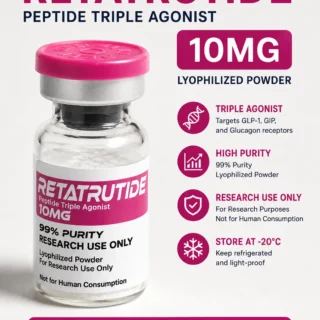
 Retatrutide Peptide Buy 10mg 3ml
Original price was: $250.00.$120.00Current price is: $120.00.
Retatrutide Peptide Buy 10mg 3ml
Original price was: $250.00.$120.00Current price is: $120.00. -
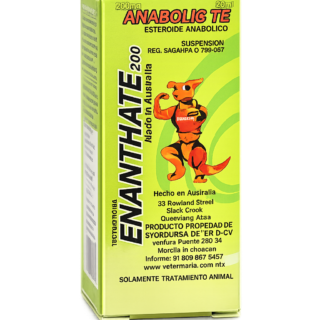
Test Enanthate 200mg 20 ml Sydgroup
Original price was: $110.00.$53.00Current price is: $53.00.
-
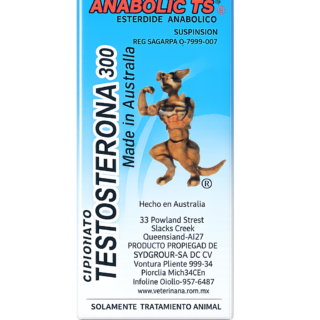
Testosterone Cypionate 300mg 20ml Sydgroup
Original price was: $99.00.$53.00Current price is: $53.00.
-
Somatrox XT Labs 150 IU x 10 vials (15 ui each)
Original price was: $450.00.$350.00Current price is: $350.00.
-
Boldenone Cypionate 200 mg / 10 mL Geno Pharma
Original price was: $90.00.$85.00Current price is: $85.00.
-
Steroid Deca Geno Pharma 300mg 10ml
Original price was: $110.00.$99.00Current price is: $99.00.
-
Eq 300 steroid Rotterdam 10ml
Original price was: $79.00.$69.00Current price is: $69.00.
-
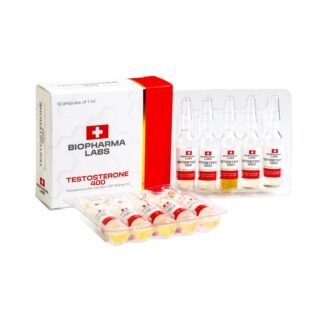
Testosterone 400 Biopharma 10 Ampoules
Original price was: $99.00.$75.00Current price is: $75.00.
-
Testosterone Cypionate 200 Biopharma 10 amp
Original price was: $99.00.$72.00Current price is: $72.00.
-
Buy Testosterone E 300mg 10 ml Geno Pharma Domestic USA/CA
$99.00
-
Testosterone Cypionate Buy 300mg 10ml Geno Pharma
$99.00
-
Buy Anavar 10mg – Purchase Geno Pharma
$99.00
-
Anavar for Sale in USA – 10mg 80 Tabs GPH-Premium
Original price was: $110.00.$80.00Current price is: $80.00.
-
NPP Steroid 100mg 10 ml Premium Domestic USA
Original price was: $99.00.$80.00Current price is: $80.00.







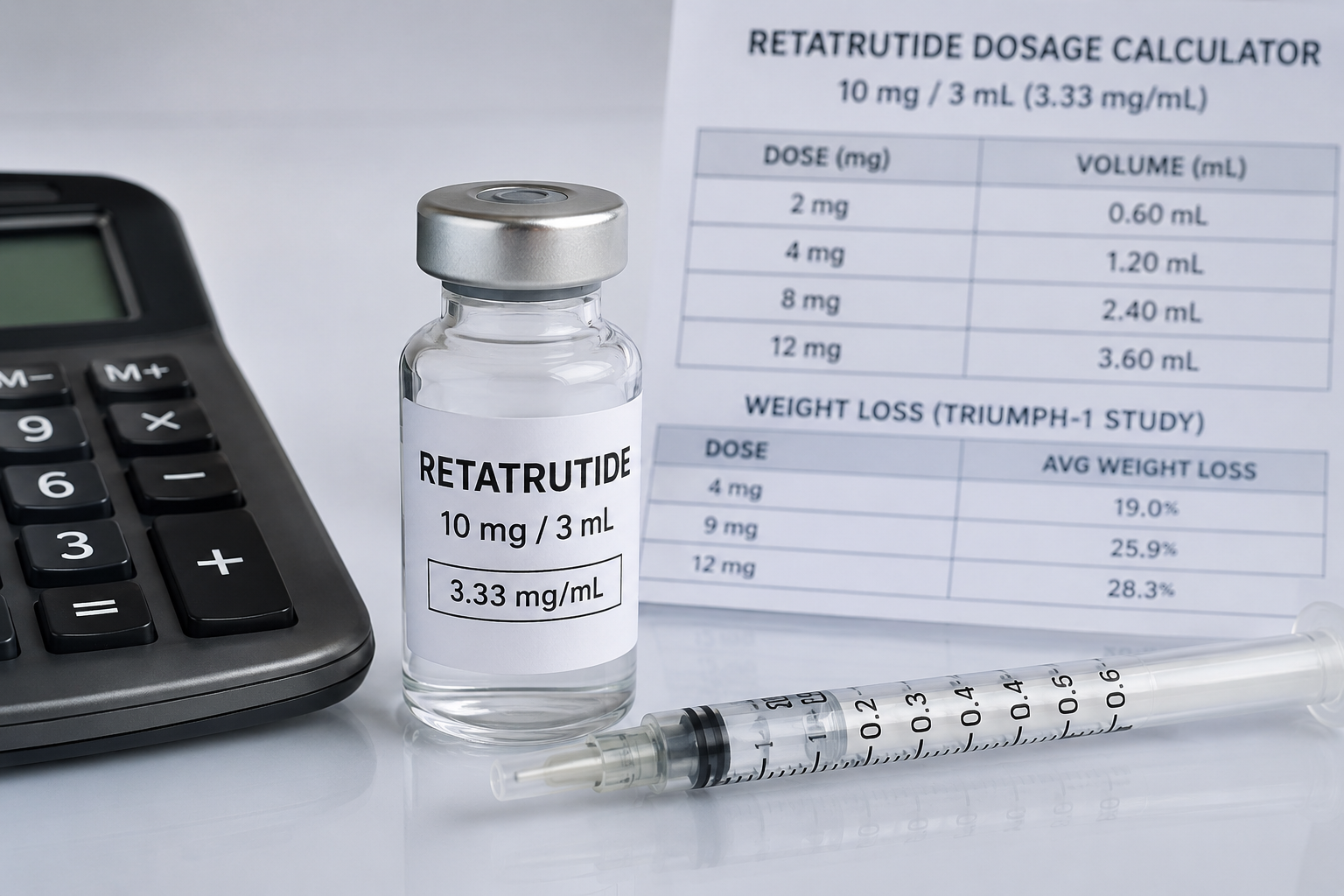
A retatrutide calculator can refer to several different types of calculations. Some users are looking for concentration mathematics, others want to compare the doses investigated in clinical trials, and others want to understand what published retatrutide weight-loss percentages would represent at a particular starting body weight.
These are different calculations and should not be mixed together.
This guide therefore separates the topic into three areas:
- Retatrutide 10 mg/3 mL concentration calculations
- Clinical-trial dose and weight-loss comparisons
- Interpretation, limitations, and frequently asked questions
For the research-concentration examples below, the calculation assumes a preparation containing 10 mg of material in a verified final volume of 3 mL.
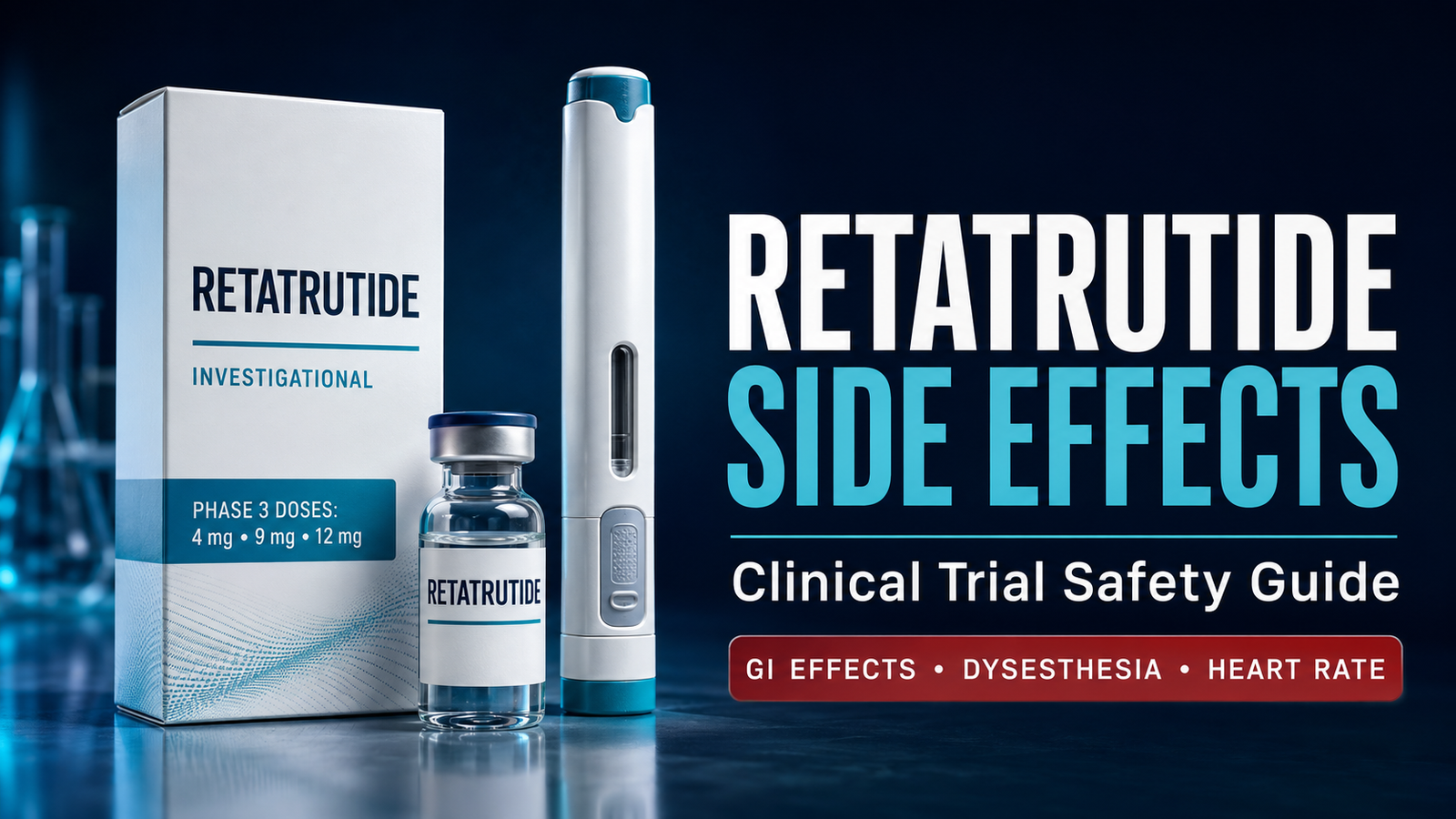
Retatrutide itself remains investigational. Eli Lilly describes it as a once-weekly GIP, GLP-1, and glucagon receptor triple agonist and states that it has not yet been approved by FDA or another regulatory agency. In July 2026, Lilly announced plans to submit a Biologics License Application to FDA in Q1 2027.
If you want to read full information about Retatrutide you can read our article below
Retatrutide 10 mg/3 mL Concentration Calculator
What Does a Retatrutide Calculator Do?
A well-designed retatrutide calculator can perform several useful mathematical functions without treating the results as prescribing instructions.
It can calculate:
- Milligrams per milliliter
- Volume represented by a specified quantity
- Total material available
- Percentage weight change
- Pounds or kilograms represented by a published trial percentage
- Mathematical projected weight
- BMI changes
- Differences between clinical-trial dose groups
The first step is always determining the actual concentration.
Retatrutide 10 mg/3 mL Concentration
If the preparation contains:
10 mg total material
in:
3 mL total volume
the concentration is calculated using: Concentration=Total Volume (mL)Total Amount (mg)
Therefore: 3 mL10 mg=3.3333 mg/mL
Rounded to two decimal places:
10 mg/3 mL = 3.33 mg/mL
This is the fundamental number needed for all subsequent concentration calculations.
Retatrutide Calculator Formula
Once concentration is known, the mathematical volume corresponding to a specified amount is: Volume (mL)=Concentration (mg/mL)Amount (mg)
Because this particular preparation contains 10 mg in 3 mL, it can also be simplified to: Volume=Amount×103
or: Volume (mL)=Amount (mg)×0.30
That shortcut applies only to a verified 10 mg/3 mL concentration.
Retatrutide 10 mg/3 mL Calculator Chart
The complete mathematical relationship can be shown in one table:
| Amount of Material | Concentration | Calculated Volume |
|---|---|---|
| 0.5 mg | 3.33 mg/mL | 0.15 mL |
| 1 mg | 3.33 mg/mL | 0.30 mL |
| 2 mg | 3.33 mg/mL | 0.60 mL |
| 4 mg | 3.33 mg/mL | 1.20 mL |
| 6 mg | 3.33 mg/mL | 1.80 mL |
| 8 mg | 3.33 mg/mL | 2.40 mL |
| 9 mg | 3.33 mg/mL | 2.70 mL |
| 10 mg | 3.33 mg/mL | 3.00 mL |
| 12 mg | 3.33 mg/mL | 3.60 mL* |
*A preparation containing only 10 mg in 3 mL does not contain 12 mg total. The 3.60 mL result is the mathematical volume that would be required at the same concentration, but it exceeds the contents of a single 10 mg/3 mL preparation.
This table eliminates the need to repeatedly calculate each amount throughout the article.
Why 1 mg Equals 0.30 mL, Not 0.03 mL
One of the easiest mistakes when using a concentration calculator is moving the decimal point incorrectly.
At 3.33 mg/mL: 3.3331=0.30 mL
The reverse calculation confirms it: 0.30 mL×3.333 mg/mL≈1 mg
By comparison: 0.03 mL×3.333 mg/mL≈0.10 mg
Therefore, 0.03 mL represents approximately 0.1 mg, not 1 mg, at this concentration.
This is why decimal placement matters significantly when performing concentration calculations.
Why Final Volume Matters
The phrase “10 mg vial” alone does not establish a concentration.
Concentration requires two numbers: Amount+Volume
For example:
| Total Material | Final Volume | Concentration |
|---|---|---|
| 10 mg | 1 mL | 10 mg/mL |
| 10 mg | 2 mL | 5 mg/mL |
| 10 mg | 3 mL | 3.33 mg/mL |
The calculations in this article therefore apply specifically to 10 mg in an actual final volume of 3 mL.
A container having a physical capacity of 3 mL is not automatically the same thing as containing 3 mL of solution.
Why 2 mg, 4 mg, 8 mg, 9 mg, and 12 mg Appear in Retatrutide Calculators
These numbers are commonly searched because they have appeared at different stages of retatrutide clinical development.
The peer-reviewed Phase 2 obesity trial evaluated target doses of 1 mg, 4 mg, 8 mg, and 12 mg. Some higher-target groups began with lower starting exposures, including 2 mg. The researchers reported that gastrointestinal adverse events were generally dose-related and were partially reduced when a lower 2 mg starting exposure was used instead of 4 mg.
Phase 3 development changed the major target doses.
In TRIUMPH-1, participants were randomized to 4 mg, 9 mg, 12 mg, or placebo. Lilly reports that participants assigned to retatrutide began at 2 mg and underwent stepwise escalation every four weeks until reaching their randomized target.
That explains why both 8 mg and 9 mg appear frequently in retatrutide searches:
- 8 mg was a major Phase 2 obesity target.
- 9 mg became a major Phase 3 target.
They represent different stages of the research program rather than interchangeable doses.
Research Concentration Math vs. Clinical-Trial Dose
A concentration calculator and a clinical trial answer two fundamentally different questions.
A concentration calculator asks:
What mathematical volume corresponds to a given quantity at a known concentration?
A clinical trial asks:
What happened when a defined investigational dose was evaluated under a controlled research protocol?
The first is arithmetic.
The second is pharmacology and clinical research.
A volume calculation does not establish whether an amount is an appropriate human dose, and the appearance of a particular milligram amount in a clinical trial does not convert that amount into an FDA-approved recommendation.
Retatrutide Weight-Loss and Clinical Trial Calculator
Retatrutide Weight-Loss Calculator
The second major search intent behind retatrutide calculator is weight loss.
Clinical trials commonly report body-weight change as a percentage.
A calculator can translate that percentage into pounds or kilograms using: Weight Change=Starting Weight×100Percentage Change
The resulting mathematical weight is: Resulting Weight=Starting Weight−Weight Change
Or more simply: Resulting Weight=Starting Weight×(1−Percentage Reduction)
The important distinction is that these calculations apply group-average trial percentages to an example starting weight. They do not predict an individual’s response.
Phase 2 Retatrutide Weight-Loss Results
The peer-reviewed Phase 2 obesity trial provides one of the clearest dose-response datasets.
At 48 weeks, mean body-weight changes were:
| Target Dose | Average Weight Change |
|---|---|
| 1 mg | −8.7% |
| 4 mg | −17.1% |
| 8 mg | −22.8% |
| 12 mg | −24.2% |
| Placebo | −2.1% |
The study included adults with obesity and was published in The New England Journal of Medicine.
What Those Percentages Mean at a Starting Weight of 250 lb
Instead of creating separate calculations throughout the article, the percentages can be translated in one table:
| Phase 2 Dose | Trial Average | Mathematical Weight Change From 250 lb | Resulting Weight |
|---|---|---|---|
| 1 mg | 8.7% | 21.75 lb | 228.25 lb |
| 4 mg | 17.1% | 42.75 lb | 207.25 lb |
| 8 mg | 22.8% | 57.00 lb | 193.00 lb |
| 12 mg | 24.2% | 60.50 lb | 189.50 lb |
Again, these are mathematical examples based on trial averages—not individualized predictions.
TRIUMPH-1 Phase 3 Weight-Loss Calculator
TRIUMPH-1 provides the major Phase 3 obesity dataset available as of August 2026.
Lilly reported the following efficacy-estimand results at 80 weeks:
| Target Dose | Average Weight Reduction |
|---|---|
| 4 mg | 19.0% |
| 9 mg | 25.9% |
| 12 mg | 28.3% |
| Placebo | 2.2% |
The average baseline weight was approximately 248.5 lb. Lilly reported average reductions of 47.2 lb, 64.4 lb, and 70.3 lb for the 4 mg, 9 mg, and 12 mg groups, respectively.
These are sponsor-reported Phase 3 results and should be distinguished from the peer-reviewed Phase 2 publication.
TRIUMPH-1 Results Applied to 250 lb
| Target Dose | Trial Average | Mathematical Weight Change | Resulting Weight |
|---|---|---|---|
| 4 mg | 19.0% | 47.50 lb | 202.50 lb |
| 9 mg | 25.9% | 64.75 lb | 185.25 lb |
| 12 mg | 28.3% | 70.75 lb | 179.25 lb |
This is a useful way for a retatrutide calculator to make percentages easier to interpret without presenting them as guaranteed results.
TRIUMPH-2: Why the Study Population Changes the Calculator
A retatrutide weight-loss calculator should not use one percentage for every population.
TRIUMPH-2 evaluated adults with obesity or overweight and type 2 diabetes. In July 2026, Lilly reported average weight reductions at 80 weeks of:
| Target Dose | TRIUMPH-2 Weight Reduction |
|---|---|
| 4 mg | 12.7% |
| 9 mg | 19.1% |
| 12 mg | 20.8% |
Lilly reported corresponding average losses of 29.8 lb, 45.4 lb, and 49.6 lb.
Compare those results with TRIUMPH-1:
| Dose | TRIUMPH-1: Without Diabetes | TRIUMPH-2: With Type 2 Diabetes |
|---|---|---|
| 4 mg | 19.0% | 12.7% |
| 9 mg | 25.9% | 19.1% |
| 12 mg | 28.3% | 20.8% |
These studies involved different populations and should not be interpreted as direct head-to-head comparisons. They demonstrate why a calculator should identify the specific trial dataset being used.
Does a Higher Retatrutide Dose Produce Proportionally More Weight Loss?
No proportional relationship was observed.
Phase 2 illustrates this clearly:
4 mg → 17.1%
8 mg → 22.8%
12 mg → 24.2%.
Going from 4 mg to 8 mg doubled the numerical dose but did not double weight loss.
Likewise, the difference between the 8 mg and 12 mg groups was only: 24.2−22.8=1.4
percentage points.
TRIUMPH-1 showed a similar pattern:
4 mg → 19.0%
9 mg → 25.9%
12 mg → 28.3%.
The difference between 9 mg and 12 mg was: 28.3−25.9=2.4
percentage points.
This demonstrates an important principle:
Concentration Mathematics Is Linear; Clinical Response Is Not
At a fixed concentration, doubling a milligram quantity mathematically doubles the corresponding volume.
Human pharmacologic response does not follow the same linear rule.
Retatrutide Dose vs. Tolerability
A useful calculator or comparison tool should show more than weight loss.
TRIUMPH-1 also reported dose-specific tolerability information:
| TRIUMPH-1 Result | 4 mg | 9 mg | 12 mg |
|---|---|---|---|
| Mean Weight Reduction | 19.0% | 25.9% | 28.3% |
| Nausea | 28.6% | 38.4% | 42.4% |
| Vomiting | 10.6% | 22.8% | 25.3% |
| Diarrhea | 25.2% | 34.1% | 32.0% |
| Discontinued Due to Adverse Events | 4.1% | 6.9% | 11.3% |
Lilly described gastrointestinal adverse events as broadly consistent with other incretin-based therapies.
Notice that the pattern is not perfectly linear. Diarrhea, for example, was reported in 34.1% of the 9 mg group and 32.0% of the 12 mg group.
Therefore, the evidence supports a general relationship between exposure and tolerability burden, but not a rule that every adverse effect automatically rises at every higher dose.
Retatrutide Percentage Weight-Loss Calculator
A user who knows both starting and current weight can calculate percentage weight change using: Weight Loss %=Starting WeightStarting Weight−Current Weight×100
For example:
Starting weight:
250 lb
Current weight:
200 lb 250−200=50 25050×100=20%
Therefore:
250 lb to 200 lb = 20% body-weight reduction
This formula is independent of retatrutide and simply calculates percentage change.
Retatrutide BMI Calculator
BMI can also be integrated into the same tool.
The conventional formula is: BMI=Height in meters2Weight in kilograms
Because height remains constant, a mathematical percentage reduction in body weight produces the same proportional reduction in BMI.
Therefore: Projected BMI=Starting BMI×(1−Selected Weight-Loss Percentage)
For example, applying a purely mathematical 25% reduction to a starting BMI of 40 gives: 40×0.75=30
This does not predict that a specific person will reach that BMI. It simply translates a selected percentage into a mathematical BMI value.
TRIUMPH-1 reported that 65.3% of participants in the 12 mg group achieved a BMI below 30 by week 80, illustrating that individual outcomes vary around the group average.
Why a Retatrutide Calculator Cannot Predict Individual Results
The arithmetic may be exact while the biological prediction is not.
For example: 250×28.3%=70.75 lb
That calculation is mathematically correct.
But it does not establish that a 250 lb individual will lose exactly 70.75 lb.
The 28.3% figure represents an average from a defined TRIUMPH-1 study population under the efficacy estimand. Participants had varying responses, and some discontinued treatment or required treatment modifications.
A scientifically responsible calculator should therefore label results as:
“Mathematical projection based on a published trial average.”
Not:
“Expected individual weight loss.”
Retatrutide Calculator FAQs, Common Errors, and Interpretation
Is There an Official Retatrutide Dosage Calculator?
No.
There is currently no FDA-approved retatrutide prescribing information and therefore no official FDA-approved dosage calculator.
Lilly continues to classify retatrutide as investigational, and FDA states that retatrutide is not a component of an FDA-approved drug and has not been found safe and effective for any condition through the FDA approval process.
Online tools described as “retatrutide dosage calculators” are therefore independent mathematical tools, not official prescribing resources.
Does a 10 mg Retatrutide Vial Always Equal 3.33 mg/mL?
No.
10 mg describes an amount, not a concentration.
The 3.33 mg/mL concentration exists only when 10 mg is present in a verified final volume of exactly 3 mL.
Changing the final volume changes the concentration.
That is one of the most important principles behind any peptide concentration calculator.
Why Do Different Retatrutide Calculators Give Different Answers?
Several factors can produce different results:
- Different assumed total volumes
- Different material amounts
- Rounding 3.333 mg/mL to 3.33 mg/mL
- Confusing vial capacity with actual solution volume
- Decimal-placement errors
- Different clinical-trial datasets
- Different analysis methods or estimands
- Using Phase 2 results instead of Phase 3 results
A calculator is only as accurate as its input assumptions.
Is Retatrutide Dosed According to Body Weight?
The major retatrutide trials discussed here used defined milligram target groups rather than calculating doses on an mg-per-kilogram basis.
For example, TRIUMPH-1 randomized participants to fixed target groups of 4 mg, 9 mg, and 12 mg, rather than assigning the target according to each person’s body weight.
This is different from the weight-loss calculator, where starting weight is used only to translate a percentage into pounds or kilograms.
Why Was 8 mg Used in Phase 2 but 9 mg in Phase 3?
Clinical-development programs often change dose selection as evidence accumulates.
The Phase 2 obesity trial evaluated major targets including 4 mg, 8 mg, and 12 mg.
The later Phase 3 TRIUMPH program selected 4 mg, 9 mg, and 12 mg as major targets in studies such as TRIUMPH-1 and TRIUMPH-2.
Therefore, an 8 mg result should generally be identified as Phase 2 evidence, whereas 9 mg is prominent in the later Phase 3 program.
What Is the Highest Major Retatrutide Target Dose Studied?
Twelve milligrams has been the highest major target dose across the principal Phase 2 and Phase 3 obesity studies discussed in this guide.
That does not make 12 mg an FDA-approved maximum dose. There is currently no approved retatrutide maximum because no FDA-approved prescribing label exists.
Does More Retatrutide Always Mean Better Results?
Not in a simple mathematical sense.
Higher target groups generally produced greater average weight reductions in the major obesity studies, but the incremental gains became smaller at higher levels.
For example, Phase 2 showed:
17.1% at 4 mg → 22.8% at 8 mg → 24.2% at 12 mg.
TRIUMPH-1 showed:
19.0% at 4 mg → 25.9% at 9 mg → 28.3% at 12 mg.
Clinical evaluation must also account for tolerability and discontinuation rather than considering efficacy percentages alone.
Can a Retatrutide Calculator Determine the Best Dose?
No.
A calculator can compare numbers reported in different study groups, but it cannot determine which exposure is appropriate for an individual.
Clinical dose selection considers variables that simple arithmetic cannot evaluate, including:
- Tolerability
- Adverse effects
- Medical history
- Concomitant medications
- Metabolic disease
- Treatment response
- Treatment interruptions
- Trial eligibility and monitoring
The trial data are useful for understanding dose-response relationships, not for producing an individualized prescription.
Can a Retatrutide Calculator Predict Side Effects?
No.
It can display the percentage of participants reporting an adverse event within a study group, but it cannot determine whether an individual will experience nausea, vomiting, diarrhea, dysesthesia, or another adverse effect.
Population statistics describe groups.
They do not predict individual tolerability.
Which Trial Should a Retatrutide Weight-Loss Calculator Use?
Ideally, the user should select the dataset.
For example:
Phase 2 Obesity, 48 Weeks
- 4 mg: 17.1%
- 8 mg: 22.8%
- 12 mg: 24.2%
TRIUMPH-1, Obesity Without Diabetes, 80 Weeks
- 4 mg: 19.0%
- 9 mg: 25.9%
- 12 mg: 28.3%
TRIUMPH-2, Obesity or Overweight With Type 2 Diabetes, 80 Weeks
- 4 mg: 12.7%
- 9 mg: 19.1%
- 12 mg: 20.8%
This is scientifically stronger than a calculator that simply labels one number as the universal “expected retatrutide weight loss.”
What Are the Most Common Retatrutide Calculator Errors?
Four errors account for much of the confusion.
Decimal Errors
At 10 mg/3 mL, 1 mg corresponds mathematically to 0.30 mL, not 0.03 mL.
Using Vial Size as Solution Volume
A container capable of holding 3 mL does not necessarily contain exactly 3 mL.
Ignoring Total Material
A concentration calculation can produce a mathematical volume that exceeds the total amount actually present in a container.
Mixing Different Clinical Trials
A 24.2% Phase 2 result at 48 weeks and a 28.3% TRIUMPH-1 result at 80 weeks come from different datasets and should not be presented as though they were the same endpoint.
Can a Calculator Verify the Quality of Retatrutide Research Material?
No.
Mathematics cannot verify:
- Chemical identity
- Purity
- Potency
- Sterility
- Endotoxin levels
- Contamination
- Stability
- Batch consistency
A calculator only processes the values entered into it.
Lilly warns that products sold outside its clinical trials cannot be assumed to have the identity, purity, concentration, or quality of the investigational material used in its studies.
Is Retatrutide FDA-Approved?
No, as of August 2026.
Lilly states that retatrutide remains investigational and is still being evaluated through its clinical-development program.
Lilly announced on July 23, 2026 that it plans to submit a Biologics License Application to FDA in Q1 2027 following positive Phase 3 results.
FDA separately states that retatrutide cannot currently be used in compounding under federal law and has not been found safe and effective for any condition through FDA review.
What Should a Good Retatrutide Calculator Show?
A comprehensive calculator should ideally contain four separate tools:
Concentration Calculator mg/mL=Total mLTotal mg
Volume Calculator mL=mg/mLmg
Weight-Loss Calculator Weight Change=Starting Weight×Trial Percentage
Percentage Weight-Loss Calculator Weight Loss %=Starting WeightStarting Weight−Current Weight×100
It could then add a Clinical Trial Comparison selector allowing users to choose Phase 2, TRIUMPH-1, or TRIUMPH-2.
That structure addresses substantially more search intent than a calculator devoted only to one conversion.
Final Considerations
The mathematics behind a retatrutide calculator is straightforward once the question being calculated is clearly defined.
For a research preparation containing 10 mg in a verified final volume of 3 mL, the concentration is: 3.33 mg/mL
and the simplified mathematical relationship is: mL=mg×0.30
That single formula covers the concentration side of the article and does not need to be repeatedly recalculated.
The clinical side is different. Retatrutide studies have evaluated several target doses and have reported substantial but non-linear differences in body-weight reduction. Phase 2 prominently investigated 4 mg, 8 mg, and 12 mg, while Phase 3 development has prominently used 4 mg, 9 mg, and 12 mg.
A strong retatrutide calculator therefore does not merely produce numbers. It tells the reader what each number means, where the underlying clinical percentage came from, and what the calculation cannot establish.
Key Takeaways
- 10 mg in 3 mL = 3.33 mg/mL.
- At that concentration, the universal mathematical shortcut is mg × 0.30 = mL.
- Phase 2 and Phase 3 doses should not be mixed without identifying the study.
- Weight-loss percentages represent study-group averages, not individual predictions.
- Higher numerical dose does not produce proportionally higher weight loss.
- Retatrutide remains investigational and currently has no FDA-approved dosage calculator or prescribing schedule.
References
Jastreboff, A. M., Kaplan, L. M., Frías, J. P., Wu, Q., Du, Y., Gurbuz, S., Coskun, T., Haupt, A., Milicevic, Z., & Hartman, M. L. (2023). Triple-hormone-receptor agonist retatrutide for obesity—A phase 2 trial. The New England Journal of Medicine, 389(6), 514–526.
Eli Lilly and Company. (2026, May 21). Lilly’s triple agonist, retatrutide, delivered powerful weight loss in pivotal Phase 3 obesity trial.
Eli Lilly and Company. (2026, July 23). Lilly’s triple agonist, retatrutide, successful in two additional Phase 3 obesity trials, delivering significant improvements in weight and A1C.
Eli Lilly and Company. (2026). What to know about retatrutide.
National Library of Medicine. (2026). A study of retatrutide (LY3437943) in participants who have obesity or overweight (TRIUMPH-1), NCT05929066. ClinicalTrials.gov.
U.S. Food and Drug Administration. (2026). FDA’s concerns with unapproved GLP-1 drugs used for weight loss.


Leave a Reply